
“What can I do when my child seems unable to slow down?” Start with connection. When the afternoon becomes a cycle of running, interrupting, and repeated reminders, you may need something more useful than another instruction to sit still and listen.
If you’re searching for therapy activities for a hyperactive child, begin with playful opportunities to move, take turns, and express feelings without expecting every activity to settle their body. Movement is allowed. At Dallas Cognitive Wellness Center, we support families in finding approaches that fit their child’s needs.
What At-Home Activities Can and Cannot Do
These are play ideas. They offer opportunities to practice specific skills, but they are not a home version of clinical play therapy or a proven stand-alone treatment for attention-deficit/hyperactivity disorder, or ADHD.
The evidence deserves care. A randomized trial of behavioral parent training found that adding it to routine care improved parent-reported behavioral problems, but did not produce an additional reduction in ADHD symptoms compared with routine care alone.
Parent support matters. The CDC recommends parent training in behavior management as the first treatment choice for children under six with ADHD, emphasizing caregiver strategies rather than expecting children to manage behavior changes by themselves.
Five Play Activities to Try at Home
1. Play a gentle stop-and-go game
Take turns leading. In an open space, walk, march, or dance together, then use a spoken “pause” cue before starting again, keeping the pace comfortable for your child’s age and abilities.
Nobody is out. If your child keeps moving after the cue, model a pause and restart without criticism, treating the game as a chance to practice responding rather than a test of obedience.
2. Plan a movement path together
Make space first. Clear a route on the floor, away from stairs and furniture edges, then invite your child to choose actions such as walking around a cushion or marching toward a doorway.
Adapt the movements. You can use seated arm movements, pointing, or another comfortable action, and let your child change the sequence so the activity includes making choices and following a short plan.
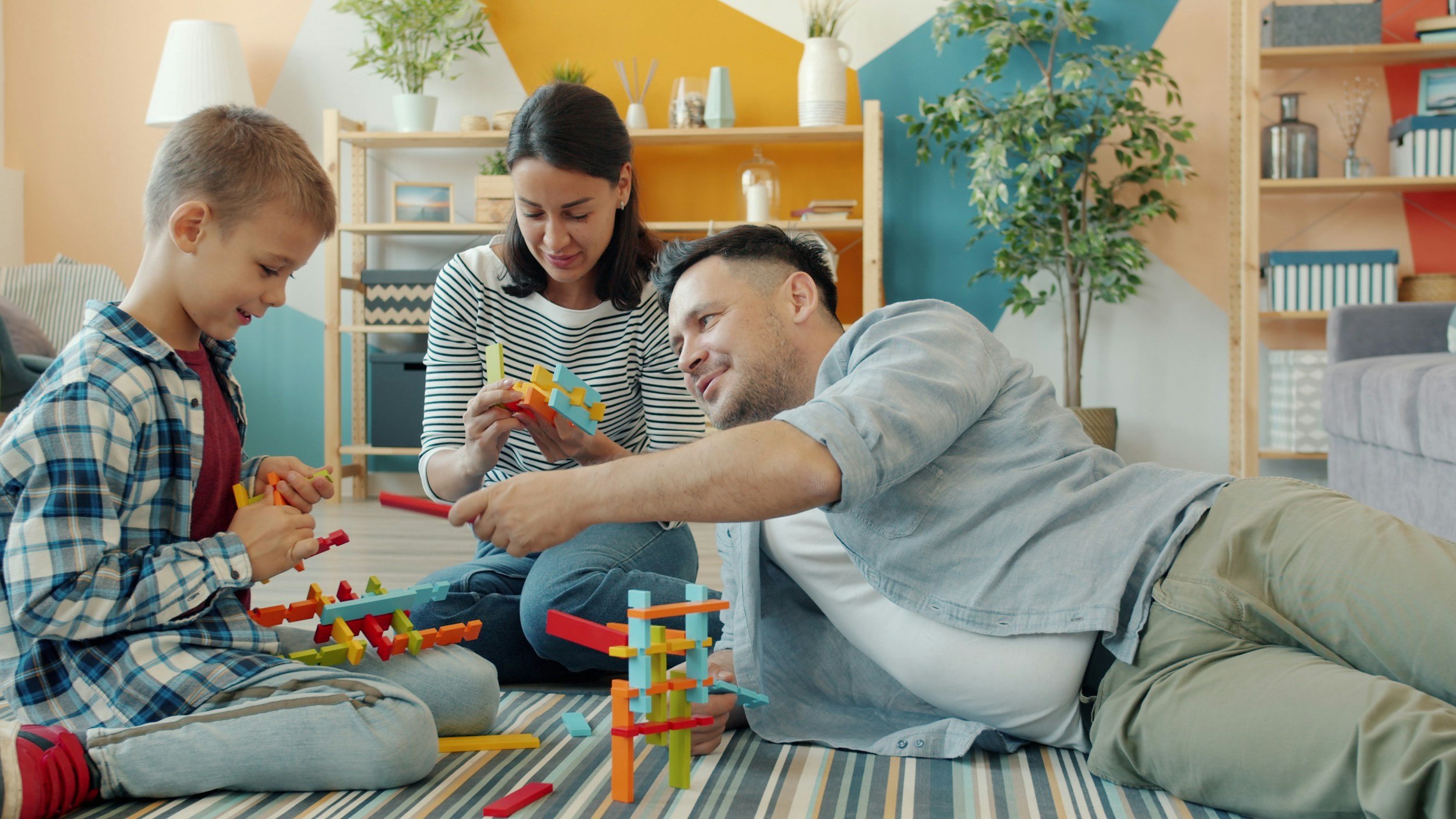
3. Build something with shared materials
Start with one idea. Use large, age-appropriate blocks to build a garage, animal home, or imaginary town, taking turns adding pieces and asking your child what they would like to create next.
Keep turns brief. If waiting becomes frustrating, shorten your turn or build separate parts side by side, giving your child a manageable opportunity to practice sharing space and asking for materials.
4. Draw feelings through a character
Offer a character. Invite your child to draw an animal or imaginary creature having a difficult day, then wonder aloud about what happened and what that character might need from someone nearby.
Let them decide. You can describe what they draw without interpreting it, accepting an unexpected story or a change of subject rather than pressing your child to reveal feelings they haven’t chosen to share.
5. Make a two-step picture mission
Choose familiar tasks. Draw two simple pictures, such as putting crayons in a box and placing the box on a shelf, then invite your child to check each picture as they finish.
Show the first step. If both instructions feel like too much, cover the second picture and uncover it later, using the activity to explore what support helps rather than demanding that your child remember everything.

How to Keep Play From Becoming Another Battle
Pick one activity. Start when your child is available for play, offer a choice between two options, and end or adapt the game if frustration or discomfort begins to build.
Notice specific efforts. Saying “You asked for a turn” gives your child clearer information than a broad judgment about being good, while leaving room for movement, mistakes, and another attempt later.
You haven’t failed. If an activity doesn’t fit, that may tell you something about timing, difficulty, or your child’s preferences, rather than suggesting that either of you needs to try harder.
How These Activities Differ From Play Therapy
The distinction matters. Our guide to play therapy for ADHD and what sessions can look like explains the clinical setting, while the ideas here are intended for everyday parent-child play.
Ask about treatment goals. In our therapy services in Dallas, play can provide a way for children to express emotions, with the approach selected around individual concerns rather than a universal activity list.
When to Consider an ADHD Evaluation
Activity level varies. If restlessness, impulsivity, or attention difficulties persist and interfere with learning, relationships, or safety, discuss the pattern with your child’s pediatrician or a qualified mental health professional.
Hyperactivity alone isn’t diagnostic. As the CDC explains about ADHD assessment, diagnosis in children involves several steps, and sleep problems, anxiety, or learning difficulties can produce symptoms that resemble ADHD.
Bring your observations. Our ADHD and neuropsychological evaluations in Dallas can help explore diagnostic questions and guide recommendations, including when your concerns extend beyond what happens during an activity at home.
Support for Your Family’s Next Step
You can begin here. Get in touch with DCWC to share what you’re noticing, ask about therapy or evaluation, and explore a starting point that fits your child and family.